Showing posts with label state. Show all posts

Wednesday, September 25, 2013

Protecting the Inland Empire's school children from abuse

Last Friday, we called on those who are in the position of raising children to resolve to take full responsibility of them in order to keep them out of the gang, crime and drug cultures which now plague significant portions of the Inland Empire. Parents, guardians and teachers have a serious obligation to provide for the needs of these children so they can grow up, learn the skills to be a productive worker and compete in the American marketplace, and become responsible and selfless leaders when they assume a position of authority.

It is becoming evident that many in the state legislature and several public labor union leaders are supporting policies that harm public school children. They have backed several examples of state legislation which do not hold public sector employees who commit child abuse crimes fully accountable. As a transit advocate, that is absolutely unacceptable. As illustrated in the A Better Inland Empire logo, we advocate for policies that will bring the Inland Empire to economic prosperity free from corruption with a first-rate transportation system in a pollution-free environment, not only for ourselves but also for our children who will be our future leaders. That means getting behind legislation that hold child abuse criminals accountable and protecting innocent kids.

A disgraceful act and trivial regulatory obstructions in the public schools
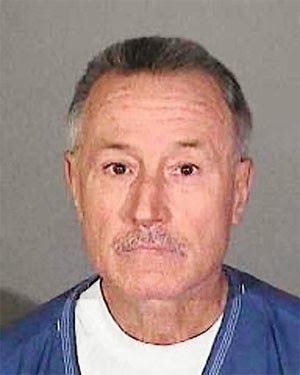
In January, 2011, this man, former Miramonte
Elementary teacher Mark Berndt, was
accused of abusing his students.
In January, 2011, former Miramonte Elementary teacher Mark Berndt was accused of abusing his students, feeding his own semen to 23 innocent school children while teaching at Miramonte Elementary School under the Los Angeles Unified School District.

The disgraceful evidence of this crime is overwhelming. According to an LA Weekly blog post, investigators confiscated over 400 photos of the in-class lewd acts, which authorities believed to have recurred over a two-year period between 2008 and 2010.

When presented with such evidence like that, both the school district's human resource office and the principal should have been able to immediately fire Berndt and hold him criminally liable for such actions. That would have been the just and right thing to do. Unfortunately, LAUSD was politically strapped from doing so.

According the LA Weekly, Berndt was immediately removed from the classroom, but the LAUSD didn't officially fire him until March no thanks to a mandatory 45-day notice period. Also under trivial rules, the accused criminal appealed the termination. In the end, the school district was forced to give Berndt a $40,000 payout just to convince him to drop the appeal and accept resignation. These trivial obstructions to remove an accused offender can be blamed on a complex teacher discipline system put together by the teacher unions. To be fair, investigators did instruct LAUSD not to conduct a duplicate investigation which may have contributed to the termination chaos, but that is no excuse to strip LAUSD or the school principal of the authority to immediately suspend Berndt without pay pending the results of such a serious investigation involving 23 children. Right now, the accused teacher is being held in jail. He has pleaded not guilty in court and his bail is set at $23 million.

The situation gets worse. This week the LAUSD was forced to hand out $27 million in settlements to victims to settle dozens of court claims. News reports indicate that the money will actually go to victims. Without question, victims should certainly be compensated for such crimes. However, this dole out came out of LAUSD's general fund, which means the good people of Los Angeles are forced to pay for Berndt's alleged crimes. LAUSD is trying to recoup some of the money from insurance, but why does it not have the power to work with law enforcement and file restitution charges in court against Berndt?

A disturbing response from the legislature

In 2012, inspired by this horrific incident and the political circus that continues to this very day, California Senator Bob Huff introduced state legislation that would give school districts more power to fire individuals accused of such criminal activity. SB 1059 passed in the Senate, but it died in the Assembly due to pressure from the California Teachers Association and other unions. The special interests claimed that SB 1059 would have taken away the teachers’ constitutional right to a fair hearing in order to confront their accusers. That is a big lie. The Founding Fathers never placed such rights into the law of the land, but have established the judicial branch to deal with such matters. SB 1059 does not abridge a teacher's right to file a wrongful dismissal claim in court, the proper forum to counter frivolous terminations should a public employee and the human resources office fail to resolve a conflict. However, union-pandering legislators thought otherwise.

The defeat of SB 1059 was a disgrace which caused public backlash; so the legislature passed AB 375 this year which awaits the Governor's signature. The bill reforms some teacher dismissal procedures but still falls well short of what SB 1059 would have done to protect school children from predators. According the San Diego Union Tribune, the bill would actually grant more job protections which led its editorial board to oppose the legislation.

The final bill, if signed into law, does nothing to protect innocent children in our public schools who are our future of San Bernardino and Riverside counties. That is absolutely disgraceful.

Discriminatory public-sector exemptions of SB 131

Bring in SB 131. This law would allow lawyers of victims to file lawsuits against private organizations for child abuse cases where the statute of limitations had expired. It's no question that abuse victims should receive restitution toward damage recovery and the law would buy them time to build up a case as mature adults. However, the bill exempts public schools and other government agencies from such litigation thanks to public employee union pandering. This is outright discriminatory. Where's the protection of our public school children from predatory teachers in this bill?

For the record we do not oppose this bill outright, but feel both its merits and issues need to be exposed. To be fair, according to the official legislative analysis report, SB 131 also extends the time limits for victims to sue against the actual individual abuser, but in 1998 and 2002, similar time limit extension laws were passed. It was AB 1651 in 2002 that targeted private organizations as a whole which created a furry of lawsuits. The law allowed victims to sue a whole organization for damages beyond age 26 with a one year window whenever some corrupt leader inside was covering up child abuse crime. The 2002 law didn't target the necessarily target criminals nor those who abusively covered up, but the private organizations as a whole. That means, victims can sue for damage restitution, but innocent donors and sponsors may end up paying the bill, not those who committed the crime.

Last decade, these child abuse lawsuits filed against organizations flooded the courtrooms of California. Today, many of these court cases have been settled between victims and the offender--Correction--the offender's organization and its donors. Billions have been paid out by the non-profit sector to the suing parties, a significant portion of which didn't even go to the victims, but to the lawyers. The situation allowed for attorneys to profit from private organizations' treasuries funded by donors who played no roll in this disgraceful criminal activity. Do we really need a repeat of this entire fiasco?

Because of these flaws, many private groups are opposing the bill and have strong and legit reasons to back up their position. The California Council of Nonprofit Organizations poured $258,000 into fighting the bill. However, some in the media are not reporting all of the facts, causing the public to brand such organizations as child-haters for opposing SB 131. Here's how the Los Angeles Times and the Huffington Post spun it; click on the links to read how these outlets reported the story and how the readers responded. On the other side, this Sacramento Bee opinion piece shows that SB 131 won’t allow lawsuits to be revived against the actual perpetrator of abuse – just his or her employer. Upon further review, that is incorrect. The bill would extend the statute of limitations for suits against actual criminals with the information buried in the official legal analysis.

Read more here: http://www.sacbee.com/2013/09/04/5707479/viewpoints-there-should-be-equal.html#storylink=cpy

It's without question that the offending criminals, pedophiles and those who willfully cover up such acts must be held accountable. Corrupt leaders in many organizations have gravely messed up, especially those in the Roman Catholic Church. The offenders must be ousted from their jobs, serve mandatory jail time and pay restitution to the victims out of their own pockets. That's fair legislation. However there is no reason to throw out a whole organization with the flawed leaders; Judas was an apostle. Today, many organizations take responsibility for such criminal activity. Most churches have implemented child protection policies such as banning Sunday school classes and clergy appointments in private homes. Volunteers and employees who work with children are subject to criminal background checks. Some organizations go as far to train such people to be mandated reporters. Do we really need to penalize such entities for that?

Is SB 131 really about protecting children by bringing those who commit or cover up such horrible crimes to justice, or are the union leaders and lawyers looking to make even more money by putting a financial strain on the non-profit sector? You be the judge.

Again, for the record, we do not outright oppose this bill, but its legal loopholes need to be brought up for discussion in the court of public opinion.

Protecting our children from the political fiscal fiasco

In fairness, California workers need protection from labor abuse; that's why they have a right to organize into a labor union. We are also in no way dissenting good and productive honest labor by hardworking teachers and those who work in the public sector. However, there is no question that many of today's union leaders are making huge sums of money paid for by the state taxpayer and the dues-paying worker. Abuse has allowed greedy leaders to buy spots in the legislature through lavish donations to politicians which have given the special interests indirect power to dictate state policy and has thus crippled the California Republic. Californians therefore have to put up with high taxes, a poor transportation network, unfriendly business regulations, and a system that holds very little accountability for public workers who abuse our children. Who exactly is running the state?

Take Action!

The madness taking place in Sacramento is a disgrace to democracy. It's time for the people of the State of California follow the example of the what the good folks in Moreno Valley are doing to reclaim their republic. It's now time to rise up against this political corruption that is harming innocent children and their future.

For the record: A previous version of the blog post incorrectly mentioned SB 131 would not extend the statute of limitations for suits against actual criminals based on faulty resource data. Upon further review of the official legislative analysis, the time limits do apply.

Monday, September 16, 2013

Californians have to wait again

The 2013 state legislative session concluded last Friday with the Legislature scheduled to reconvene January 6, 2014. Generally, the state government has once again failed to pass legislation that will allow the private sector to improve the state's market economy and the state's spending spree under the will of labor groups continues. Between the state and local governments, Californians owe nearly $850 billion in debt, and that figure will likely top $1 trillion according to a report by The California Public Policy Center if the public wage and pension madness continues in the state.

That debt can never be paid off or controlled under the current economic and political climate no matter how high taxes are increased. In August, we've called for the state to take action on this spending fiasco problem by passing fair and sound legislation. Trivial regulations have sapped marketplace economic expansion. Government misspending and high public employee salaries have led to overpriced and delayed transportation infrastructure and operations. Both controversies place heavy obstructions on getting Southern California moving with a first-rate transit system. So what kinds of bills did the Legislature actually send to Governor Jerry Brown? How did the lawmakers fare in solving our transportation problems from the state level? Let's take a look at few:

CEQA Reform - Under current law, loopholes in the landmark legislation allow just about anybody with a lawyer to send any major development project to court whether or not such development would actually negate the environment. This undoubtedly inflates costs.

Guess what? Significant reform will have to wait until 2014. Instead, the state approved special favor legislation that would speed up the judicial review process of any lawsuits filed specifically against the replacement of an NBA sports arena in Sacramento. To be fair, the new arena will serve as a replacement venue from the existing Sleep Train Arena and the facility will be developed in the downtown area. We'll take a closer look at this project before making a judgment, but granting special favors and exemptions in general is certainly not fair public policy. By the way, local officials in Riverside County requested a similar favor when the Metrolink Perris Valley Line was stalled in court; that never became law. 

Wage Reform and California's Market Economy - We've called on the state to seriously reform public employee wages and pensions to match salaries offered in the marketplace. We've pushed for the state to support legislation that would allow the private sector to invest in the state's economy without directly dumping any public money into the marketplace. That would have increased the value of worker wages and benefits. A strong labor workforce fuels our transportation systems with the resources needed to operate. Such policy would be a win-win for both businesses and their workers. Did the state and unions propose productive legislation like that?

Nope. Instead, the state approved a bill that would hike California's minimum wage to $10 per hour by 2016 in a vain attempt to prop up the economy. Brown reported that he would sign the bill into law. To be fair, many working Californians will see an increase in take home pay and may be inclined to spend more. Although it looks fine on the surface, the value of the wage dollar will only go up under a robust economy and the abundance of marketplace jobs. Under the current political climate and job market, that's not going to happen. Instead, Californians are going to see the dollar further inflated and devalued if nothing is done to improve the state economy.

To make up for the losses, businesses are going to have to increase their prices or cut positions. That's a reality. Just wait and see how much you'll be paying for a Big Mac a few years from now. Also, with the devalued dollar in the state, fed up Californians and businesses may simply move out.

The state had better whip up some plans to make California a better place to do business and fast. The state needs to cut out trivial state regulations so that the wage hike doesn't worsen a soft state economy nor cause a cost hike of already overpriced transportation infrastructure projects. Specifically, California will need to get its economic level to match the robust economic times of 1968 where the value of a $2-per-hour federal minimum wage spiked over $10 in today's currency. This must be done without inducing pollution, urban sprawl, traffic congestion, or corporate corruption. You want a high minimum wage? That's how it's going to work for the economy. In fairness, the state did pass modest public pension reforms last year and is fighting to keep the legislation active in federal court. However, much more must be done to get California's economy back to a robust state. 

Clean Air - On the pollution front, things aren't so bad. China's top climate negotiator and Brown signed a Memorandum of Understanding on Friday to combat dirty Chinese air. The MOU does reference heavily on global warming, still a debatable topic, but the fact is that China's pollution remains at disastrous and unhealthful levels and must be controlled. The focus certainly should be about protecting the lives and the health of the Chinese with clean air, especially given that much of our consumables are manufactured there. We'll see if this MOU does anything to clean up China's disgraceful air quality.

We'll continue to analyze what's happening up in Sacramento and see how the proposed laws will impact the future of Inland Empire mass transit. However, it generally looks like fair and sound legislation to fix California's transportation system with a strong and productive marketplace labor workforce is going to have to wait again.

Monday, August 5, 2013

California State Transit Funding

As most are aware, local public transit is a vital government service, similar to defense, emergency, and public school services. Transit entities such as the Riverside Transit Agency and Omnitrans rely on a mix of various funding sources from the local level all the way to the federal government in order to provide us with the means to get around. These taxpayer resources pay for both transportation infrastructure and operations, a service that benefits the general public.

Recently, public transportation budgets have tightened due to continued spending toward special interest groups and the failure to police government expenses. Transportation funding has long been an issue despite the fact that Californians are paying the highest gas taxes in the country. While its true that funding reductions can be attributed toward the Great Recession, both the state and the feds continue to displace such resources into programs which too often benefit special interests and not the general public. Local agencies have therefore had to come up with other ways to pay for our transportation infrastructure and operations: service reductions, fare increases, delayed capital improvement projects, and mandatory tolls and transponders for private carpools to use the high occupancy lanes.

The Transit Coalition coordinates with other transportation advocacy organizations to fight for and protect critical state funding and to make sure such resources actually make it to the streets and rails as it should.

Thursday, June 13, 2013

Moving forward with the Perris Valley Line lawsuit ruling

Metrolink to Perris.
It is quite evident that the Riverside County Transportation Commission is doing whatever it can within its power to get the Perris Valley Line moving, and the agency has every right to do so given that the rail line is environmentally friendly, the right-of-way is publicly owned, and the majority of the public supports it. Earlier in May, Superior Court Judge Sharon Waters ordered that RCTC decertify the project's EIR within 90 days because of puritanical environmental issues which could be easily resolved. RCTC had a number of options to move foward:
  • RCTC can appeal the judgment at a higher court.
  • According to Len Nunney, the secretary for Friends of Riverside Hills, RCTC can engage in a settlement without having to recompile its EIR.
  • RCTC can lobby the state legislature for CEQA reform
RCTC has basically selected "All of the above." The Commission board voted in closed session at its 6/12/13 meeting to appeal Judge Waters' ruling. RCTC filed the appeals paperwork with the Fourth District Court of Appeals. Even with the appeals papers filed, the two parties remain open to settling the case without RCTC having to redo the Perris Valley Line EIR.

Just days before the meeting, RCTC Chairwoman Karen Spiegel, Riverside County Supervisor Marion Ashley, and City of Perris Mayor Daryl Busch met with members of the state legislature to lobby for an exemption of the rail line's trivial and construction-related environmental issues from the current legal loopholes in CEQA law. It is without question that the landmark law needs to be amended and made retroactive to counter abusive lawsuits; however, to be fair, fast-tracking projects by granting outright CEQA exemptions is very questionable. During settlement negotiations, RCTC must also ensure that the NIMBY party is not receiving any unnecessary "home improvements" paid for by county taxpayers.

Judicial appeals processes normally take several months from start to finish, but RCTC still predicts breaking ground later this July. It is still early to predict what will happen. This trivial lawsuit in general has one big message for the state: Close up the CEQA loopholes.

Thursday, February 28, 2013

More unbelievable spending proposals from the state government

State transportation spending declines over 30% while government employee retirement benefits increase 25%. It's time to reverse this pattern.

A load of cash. A new report released by nonprofit California Common Sense shows that larger portions of the California state budget have increasingly been going toward state employee salaries, retirement benefits, and healthcare while state transportation spending has decreased a whopping 31% since FY 2007-2008. Ever wonder why those potholes take so long to get fixed? Other state services had similar cuts. Looks like services at the DMV won't improve anytime soon nor will recently cut school bus service be making a comeback through the near future. When Gov. Jerry Brown unveiled his proposed FY 2013-2014 budget, he indicated that more money would be directed toward education, but the report shows the opposite.

The state is projected to take in over $10 billion more in additional revenue than from the 2007-08 fiscal year mainly due to the increased taxes, but state funding for many government programs will actually be lower due to increasing costs of health care and employee benefits. To be fair, the governor is credited for submitting a balanced budget and a special Legislative session will take place to debate the rising health care costs.

Robust debate is welcome, but the state must address this serious problematic spending trend head-on. According to the report, state spending on health care is up 62%. Employee compensation, up 16%. Employee retirement, up 25%. Debt obligations, up 24%. The most shocking increase is unfunded employee retirement benefits, up over 90% from $111.5 billion in FY 2007-08 to $211.4 billion in FY 2013-14. Even more alarming, to fund these employee accommodations, transportation spending is cut and taxes have risen. We are seeing a discouraging trend where the state government is spending less to serve the people of California and more on state employees, paid for by increased taxes. It's yet another reason why The Transit Coalition continues to question budget-related fare increases and object to transit cuts and tolls for carpools to use a high occupancy lane.

Speaking of HOT lanes, LA Metro is now permitting motorcycles to use the Metro ExpressLanes for free and without mandatory transponders. Metro's move is smart since motorcycles have long been considered an HOV for a variety of safety reasons. With non-registered motorcycles out of the congested general purpose lanes and into the HOT lanes, the freeways will have fewer instances of motorcycle lane splitting and will thus be safer to travel. Now, would OCTA and RCTC consider the same idea for the 91 Express Lanes? What about the other HOV's?

In related news, Metro opened the new I-10 HOT lanes last Saturday. The facility forms the culmination of a $210 million project funded by the federal government that also included the I-110 HOT lanes, which opened in November. Tolls for using the entire length of the lanes range from $4 to $7 depending on the time of day. Metro expects to spend $7 to $10 million to operate the lanes while gaining $18 to $20 million in revenue during the year-long demonstration. LA Streetsblog dissected one particular article that discusses the new lanes in a less-than-favorable light.

Thursday, February 7, 2013

Will the Perris Valley Line lawsuit ruling embarrass the state government?

The decision to build an environmentally friendly rail transit line appears to be coming from the bench due to loopholes in state environmental law. A 'no' ruling would encroach the Separation of Powers in the name of puritanism.

Two Metrolink locomotives. The primary function of the judicial branch of government is to interpret both the state and U.S. Constitution and apply law to the facts of cases at hand. Courts have no right to veto or overturn the laws or policies which do not violate constitutional law, even if a judge is against the law. Whenever courts unilaterally impose their own opinions and beliefs onto the law, many Americans dislike that; such activity is legislating from the bench and overreaches their authority of the Separation of Powers written in the U.S. Constitution. This Press Enterprise blog post suggests that the Metrolink Perris Valley Line's fate is in the hands of the courts; a project that should clearly be decided on by a local elected body, that is, the Riverside County Transportation Commission. RCTC has long supported and planned the project.

The Commission rightly followed the rules and prepared the project's mandated environmental impact report, but loopholes in the California Environmental Quality Act have allowed an opposing NIMBY party to exploit "missing" information in the EIR in a lawsuit to stop the entire project. The case was merited to go to trial and is now in the hands of a Superior Court judge. From an impartial judicial standpoint, there's nothing wrong, and to be fair, the EIR for any major project must accurately address potential traffic congestion and pollution impacts. However it is a common fact that a rail transit alternative for the I-215 corridor would reduce congestion and pollution by providing a multi-modal transportation option to single-occupancy automobile travel, thus fulfilling the goals and intents of CEQA which is to protect the environment.

The claims presented by Friends of Riverside's Hills are very puritanical and point primarily to the project's construction, not the finished product. The opposing group claims the EIR underestimates the number of truck trips needed to haul away dirt during construction and the time required to excavate the dirt. RCTC's proposal to remove an illegal trail crossing over the right-of-way is said to be bad for the environment according to the opposing party. Other frivolous claims such as the squealing noise train wheels make when taking sharp turns, engine noises, and construction-related matter were also brought up in court.

It is discouraging that this case was allowed to go to trial. This is an embarrassment to the state government. The legislative branch does have power to avert any negative court judgments against RCTC and the Perris Valley Line. The state should amend CEQA so that bidding construction firms are held accountable for all construction-related environmental and traffic impacts. We the people should not be held responsible if a construction contractor decides to generate too much dust pollution, noise or excessive truck traffic. The law should penalize contractors and their employees if they excessively pollute. The legislature should also close up CEQA loopholes so courts cannot veto or overturn large projects which actually benefit the environment and reduce traffic congestion. The reformed law should also be made retroactive to any transportation project stalled in court over such frivolous EIR claims. Let's get the Perris Valley Line moving.

Tuesday, December 18, 2012

Metrolink Perris Valley Line Lawsuit: Frivolous or not?

Both the state and the feds need to close the legislative loopholes for transportation environmental impact reports.

Several Riverside County transit riders and commuters have been long wondering: When exactly will the Metrolink Perris Valley Line extension project finally break ground on construction? Transit officials estimate spring or summer of 2013 as the Riverside County Transportation Commission was awarded state funds for the project. It is currently awaiting federal funding, and a lawsuit filed against the project will be finally over by then. $53 million has been obligated to RCTC from the California Transportation Commission. $75 million from the federal government is awaited, after which the $247 million Perris Valley Line project will be fully funded. RCTC must be prepared and be ready to confront any possible delays from the federal level to prevent anything else from delaying groundbreaking. We've been patiently waiting...

The Metrolink Perris Valley Line. As many of you are aware, the proposed Perris Valley Line Metrolink extension is being challenged in court with its trial scheduled to start in January. An opposing organization called Friends of Riverside Hills filed a lawsuit in August 2011 challenging the Environmental Impact Report for the rail project, claiming RCTC failed to adequately detail the noise and pollution impacts of excavating dirt around the tracks and other aspects of construction. The case was merited to go to trial last April. The group represents residents living in the residential areas near UC Riverside.

To be fair to all parties involved, we live in the United States of America and we citizens have a right to peacefully organize, freely participate in robust debates, and challenge each other on issues. That's a welcomed reality of living in a free democracy; otherwise The Transit Coalition wouldn't exist. Friends of Riverside Hills is challenging RCTC fair and square as its lawsuit has legal merit; that's why the case has been allowed to go to trial. However, the issue at stake is a classic example of how a small issue can become a big judicial problem; a loophole which should be addressed by lawmakers.

It's a clear fact that moving dirt around and grading sites are basic steps for just about any major construction or development project, even those that don't require an EIR. Both the state and the federal government must consider revisiting transportation legislation to prevent minor claims like those addressed by Friends of Riverside Hills from having legal merit in the future. This will prevent future transit and highway projects from being mired in unnecessary expensive litigation which ends up being paid for by local and county taxpayers. Obviously, there should be written rules, mandates, and limits to keep dust pollution and noise caused by grading and construction to a minimum. The law should state: If the construction contractor violates these terms, pollutes the air or becomes too noisy, the firm, not the taxpayer, gets fined.

Under the current system, RCTC is mandated to conduct a detailed analysis on dust and noise pollution caused by transportation construction. Friends of Riverside Hills found there wasn't enough data reported in the project's EIR and now the case is headed to trial. This current system allows for a pure waste of local transportation resources. Protection against construction-related dust pollution and noise is absolutely vital and it can be regulated under better written state and/or federal law, not litigation. If such provisions were in place, the Perris Valley Line construction contractor would have been held more accountable for any construction-related pollution and noise, RCTC would know which areas of the corridor would need to be quiet-zone designated, Friends of Riverside Hills would have ended up with a frivolous case and the lawsuit against the long-overdue Perris Valley Line would have been thrown out by any impartial judge. This legal loophole must be closed by the state and feds, and it needs to be done soon.